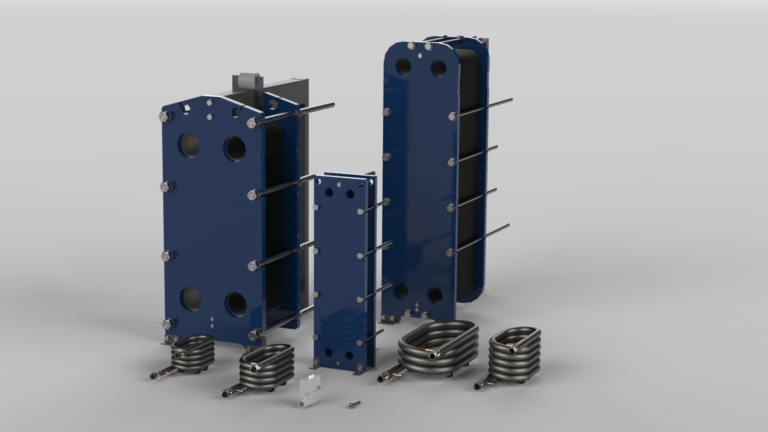
Titanium vs Stainless Steel Evaporators

Engineering Comparison & Material Selection Guide

Engineering Comparison & Material Selection Guide

This comparison is intended to support engineering material selection for evaporators operating in corrosive or high-reliability industrial environments.

Corrosion Mechanisms

Titanium

  • Passive oxide layer is stable and self-healing
  • Resistant to chlorides, halides, and seawater
  • Minimal risk of localized corrosion

Stainless Steel

  • Chromium oxide layer breaks down in chlorides
  • Susceptible to pitting and crevice corrosion
  • High risk of stress corrosion cracking under heat

Engineering Conclusion: Titanium offers fundamentally superior corrosion resistance.

Mechanical and Structural Performance

Titanium

  • High strength-to-weight ratio
  • Excellent fatigue resistance
  • Suitable for vibration-prone and marine environments

Stainless Steel

  • Heavier for equivalent strength
  • Fatigue life reduced by corrosion damage

Heat Transfer Performance

Titanium

  • Consistent thermal performance over time
  • Thin-wall tubing offsets lower raw conductivity
  • No corrosion-related heat transfer degradation

Stainless Steel

  • Initial performance acceptable
  • Thermal efficiency declines as corrosion and fouling develop

Maintenance and Inspection Requirements

Titanium

  • Reduced inspection frequency
  • Lower risk of tube leaks or rupture
  • Fewer unplanned shutdowns

Stainless Steel

  • Frequent inspection required
  • Higher likelihood of leaks and tube replacement
  • Increased downtime risk

Lifecycle Cost Analysis

Titanium

  • Higher initial capital cost
  • Lower maintenance cost
  • Long replacement intervals
  • Predictable long-term operation

Stainless Steel

  • Lower upfront cost
  • Higher maintenance and replacement expense
  • Unpredictable failure modes

Engineering Recommendation: Titanium provides lower total cost of ownership in corrosive applications.

Typical Engineering Use Cases

Specify Titanium When:

  • Seawater or brine is present
  • Chlorides exceed safe limits for stainless
  • System uptime is critical
  • Replacement access is limited

Specify Stainless Steel When:

  • Fluids are non-corrosive
  • Budget constraints dominate
  • Short system lifespan is acceptable

For more information, please visit the FAQ page

Titanium vs Stainless Steel Evaporators

For evaporator systems exposed to seawater, chemicals, or aggressive industrial fluids, titanium is the engineering-standard solution. Stainless steel may reduce initial cost, but titanium minimizes risk, extends service life, and stabilizes long-term system performance.

Request a Quote or Technical Consultation

Whether you need a standard evaporator or a fully customized solution, our team can assist with technical specifications, material selection, and system design.

Contact us today to discuss your application and request a quote for a titanium evaporator system engineered to perform in the harshest environments.