Titanium Evaporators
FAQ – Titanium Evaporators
This FAQ addresses common technical, operational, and material-selection questions about titanium evaporators used in industrial, chemical, and seawater applications.
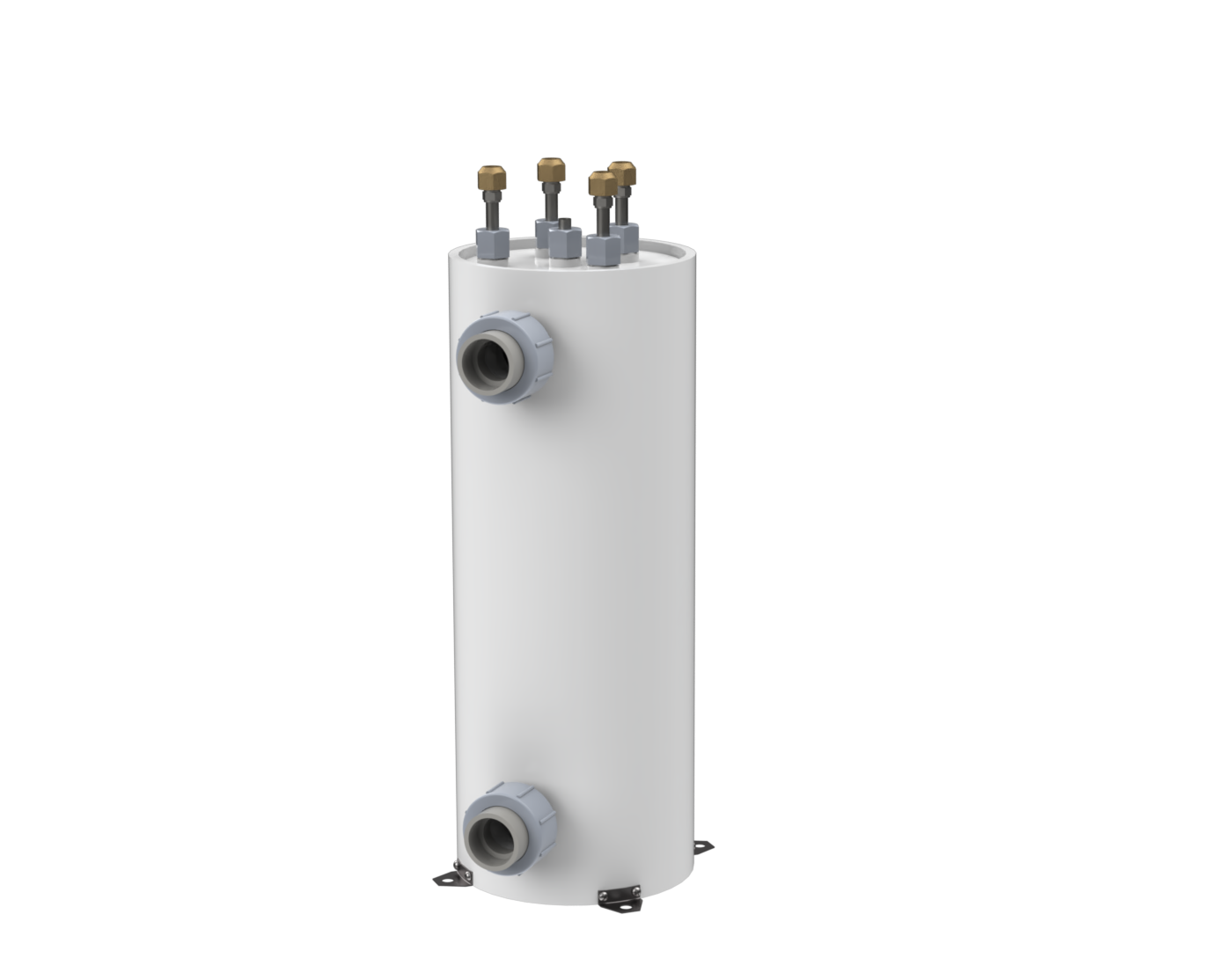
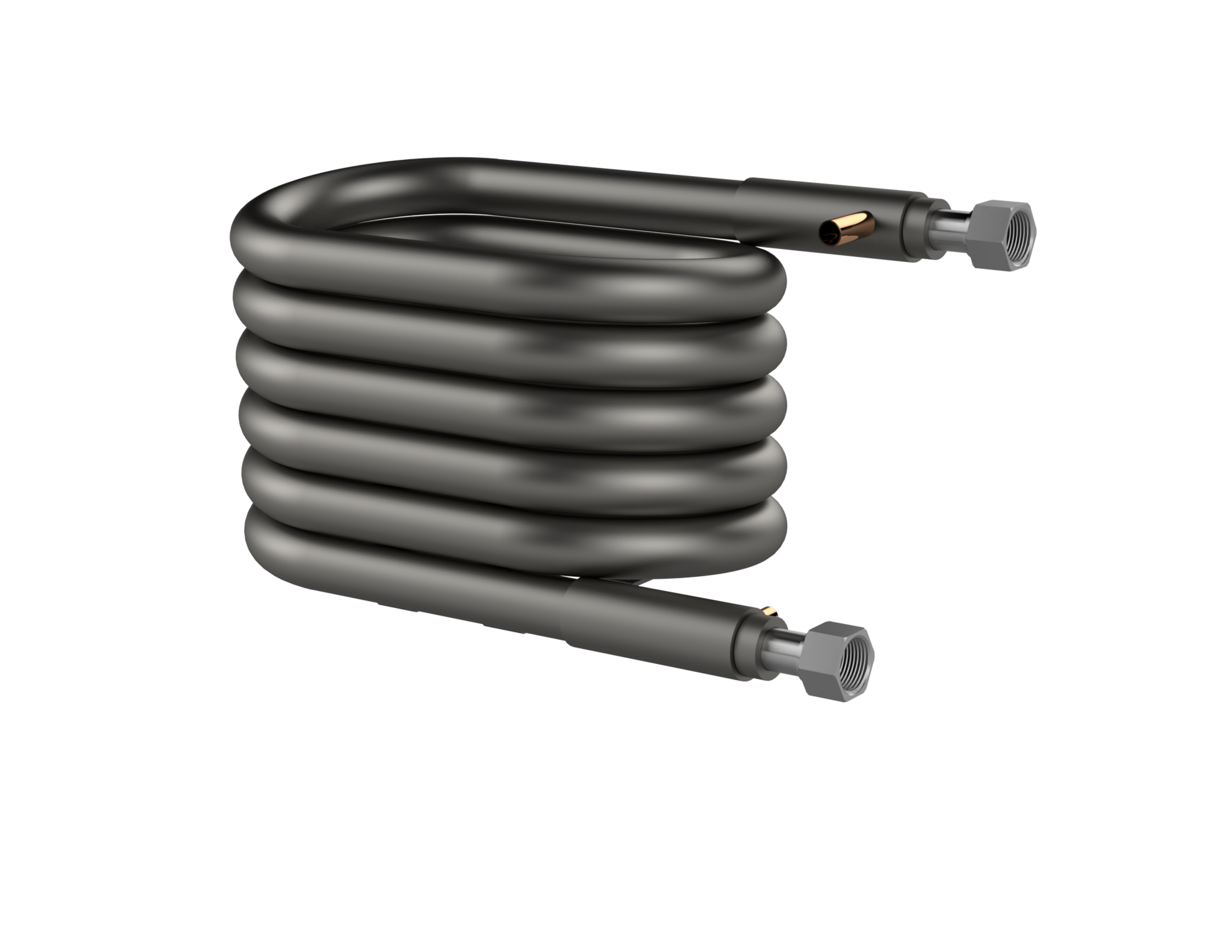
A titanium evaporator is a heat exchanger designed to vaporize liquid using titanium as the primary wetted material. Titanium is selected for applications where corrosion resistance, material stability, and long service life are critical, particularly in seawater, brine, and chemical processing systems.
Titanium evaporators are commonly configured as tube-in-tube, shell-and-tube, or fluid-to-fluid heat exchangers, depending on thermal load and installation constraints.
Titanium provides:
- Near-immunity to chloride-induced corrosion
- Resistance to pitting, crevice corrosion, and stress corrosion cracking
- Stable thermal performance over long operating periods
Stainless steel alloys, even high-grade variants, degrade rapidly in seawater and chemical environments, leading to premature tube failure and increased downtime.
Most industrial evaporators use:
- Grade 2 titanium for general corrosion resistance and cost efficiency
- Grade 7 or Grade 12 for enhanced chemical resistance or elevated temperature applications
Final grade selection depends on fluid chemistry, temperature, and pressure.
Titanium evaporators can be engineered for:
- Wide temperature ranges, including high-temperature process fluids
- Elevated operating pressures, depending on tube wall thickness and system design
Design limits are governed by:
- ASME or applicable pressure vessel standards
- Tube diameter and wall thickness
- Fluid velocity and phase change characteristics
Titanium performs exceptionally well in continuous, untreated seawater. Unlike stainless steel, it does not rely on sacrificial corrosion mechanisms. Its oxide layer regenerates naturally, even after mechanical abrasion.
This makes titanium evaporators ideal for:
- Marine HVAC
- Offshore platforms
- Desalination support systems
- Brine concentration processes
Titanium surfaces resist scaling and biofouling more effectively than many metals. While no evaporator is completely immune, titanium systems typically experience:
- Slower fouling rates
- Easier chemical or mechanical cleaning
- Less performance degradation over time
Yes. Customization options include:
- Tube diameter and length
- Flow configuration (counterflow / parallel flow)
- Horizontal or vertical orientation
- Mounting and connection types
- Integration with existing process equipment
In corrosive environments, titanium evaporators often provide decades of service life, significantly outlasting stainless steel alternatives. Lifecycle longevity is one of the primary reasons engineers specify titanium despite higher upfront cost.
Stainless steel evaporators are not recommended when:
- Chloride concentration is high
- Seawater is present
- pH is highly acidic or alkaline
- System failure would cause operational or safety risk
Selection should consider:
- Fluid chemistry
- Heat load (BTU/hr or kW)
- Flow rate and velocity
- Operating temperature and pressure
- Installation constraints
A technical review ensures the evaporator meets both performance and durability requirements.
Titanium evaporators can be designed for high-temperature and high-pressure applications, depending on the specific configuration and tubing dimensions. Final limits depend on system design, fluid type, and applicable engineering codes.
Request a Quote or Technical Consultation
Whether you need a standard evaporator or a fully customized solution, our team can assist with technical specifications, material selection, and system design.
Contact us today to discuss your application and request a quote for a titanium evaporator system engineered to perform in the harshest environments.
Contact Us