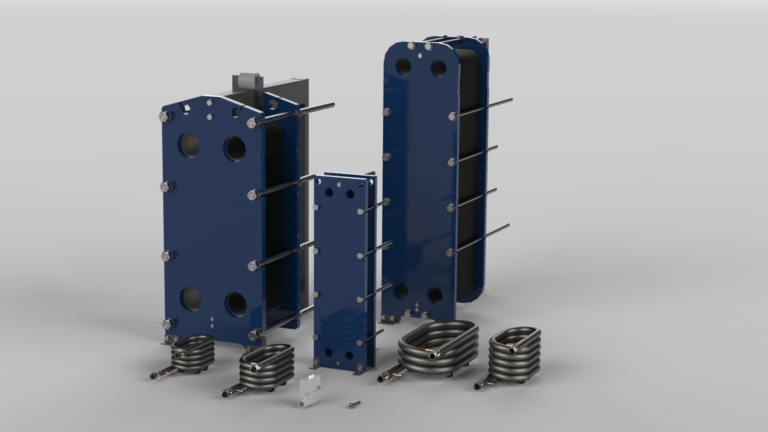
Titanium vs Stainless Steel Evaporators
Engineering Comparison & Material Selection Guide
This comparison is intended to support engineering material selection for evaporators operating in corrosive or high-reliability industrial environments.
Corrosion Mechanisms
Titanium
- Passive oxide layer is stable and self-healing
- Resistant to chlorides, halides, and seawater
- Minimal risk of localized corrosion
Stainless Steel
- Chromium oxide layer breaks down in chlorides
- Susceptible to pitting and crevice corrosion
- High risk of stress corrosion cracking under heat
Engineering Conclusion: Titanium offers fundamentally superior corrosion resistance.
Mechanical and Structural Performance
Titanium
- High strength-to-weight ratio
- Excellent fatigue resistance
- Suitable for vibration-prone and marine environments
Stainless Steel
- Heavier for equivalent strength
- Fatigue life reduced by corrosion damage
Heat Transfer Performance
Titanium
- Consistent thermal performance over time
- Thin-wall tubing offsets lower raw conductivity
- No corrosion-related heat transfer degradation
Stainless Steel
- Initial performance acceptable
- Thermal efficiency declines as corrosion and fouling develop
Maintenance and Inspection Requirements
Titanium
- Reduced inspection frequency
- Lower risk of tube leaks or rupture
- Fewer unplanned shutdowns
Stainless Steel
- Frequent inspection required
- Higher likelihood of leaks and tube replacement
- Increased downtime risk
Lifecycle Cost Analysis
Titanium
- Higher initial capital cost
- Lower maintenance cost
- Long replacement intervals
- Predictable long-term operation
Stainless Steel
- Lower upfront cost
- Higher maintenance and replacement expense
- Unpredictable failure modes
Engineering Recommendation: Titanium provides lower total cost of ownership in corrosive applications.
Typical Engineering Use Cases
Specify Titanium When:
- Seawater or brine is present
- Chlorides exceed safe limits for stainless
- System uptime is critical
- Replacement access is limited
Specify Stainless Steel When:
- Fluids are non-corrosive
- Budget constraints dominate
- Short system lifespan is acceptable
For more information, please visit the FAQ page.
For evaporator systems exposed to seawater, chemicals, or aggressive industrial fluids, titanium is the engineering-standard solution. Stainless steel may reduce initial cost, but titanium minimizes risk, extends service life, and stabilizes long-term system performance.
Request a Quote or Technical Consultation
Whether you need a standard evaporator or a fully customized solution, our team can assist with technical specifications, material selection, and system design.
Contact us today to discuss your application and request a quote for a titanium evaporator system engineered to perform in the harshest environments.